Sunday, March 31, 2024

Understanding California House Arrest and Electronic Monitoring Requirements

house arrest

The length of a house arrest sentence can vary depending on the severity of the case. In those instances, the criminal case has not yet been resolved, and rather than have the defendant wait in jail before their trial; they are put on house arrest. In these instances, the house arrest sentence will last as long as the case is pending. The sentence is viewed as an important alternative to standard incarceration at various stages of the criminal justice process. It is employed by criminal justice systems around the world and often entails very diverse requirements. There are several forms of house arrest, depending on the severity of the requirements of the court order.

How Do Home Detention and Electronic Monitoring Work?

Also, the supervising officers will closely monitor all activities in the home. While on house arrest, the defendant cannot have parties at the home or participate in other questionable activities. The supervising officer will also know and approve anyone else who lives in the house.

Office of Justice Programs

house arrest

Electronic monitoring, with or without the other conditions of house arrest, are also common in other contexts besides pretrial release, probation, or parole. Immigration and Customs Enforcement (I.C.E.) requires immigrants—including applicants for asylum—to be fitted with GPS ankle monitors while they’re waiting for their cases to be heard in immigration court. Also, many states require certain sex offenders to wear ankle monitors for the rest of their lives even after they've served their full sentence. At the front end of the system, for pretrial defendants, a limited use of house arrest is likely to be cost-effective as long as it is used for people who normally would not be released on their own recognizance or who cannot make bail. Furthermore, the fact that offenders often are allowed to work enables them to support families, pay restitution, and even help pay for the equipment used to monitor them. One must also consider rates of recidivism and the safety of the public when determining cost-effectiveness.

Jailed Malaysian ex-PM Najib makes legal bid to serve sentence under house arrest - Reuters

Jailed Malaysian ex-PM Najib makes legal bid to serve sentence under house arrest.

Posted: Wed, 03 Apr 2024 07:00:00 GMT [source]

The Extent of Home Confinement

Researchers are finding that ankle monitors are keeping people connected to the prison system longer than ever, as more remain strapped to the devices for over a year. The most severe form of home confinement is “house incarceration” rather than house arrest. If an offender is given this sentence, they will be restricted to staying home 24 hours per day, seven days per week. The only time this person can leave would be to attend court appearances or medical appointments. House arrestees are fitted with an electronic monitoring device that is usually placed on their ankle. The device is monitored by the local police department or a third party provider who provides reports to the police, the court, or the probation officer.

This may be an option when making monetary bail is not an option, or the judge will not consider bail. House arrest allows people to continue participating in parenting, work, religious services, medical appointments, and appointments with their criminal defense lawyer during the pre-trial period. In Alameda County, young people on ankle monitors are required to charge them daily between 7 and 9 p.m. Other people were assigned ankle monitors as an alternative to bail as they awaited trial in a backlogged court system that moved online. In justice and law, house arrest (also called home confinement, home detention, or, in modern times, electronic monitoring) is a measure by which a person is confined by the authorities to their residence.

Can You Have Visitors While on House Arrest in PA?

If the violation was minor, the court might also adjust the curfew or the list of acceptable reasons to be outside of the home. At sentencing, the judge may sentence an offender to home detention where they would otherwise receive a short-term prison sentence (i.e. two years or less). Home detention sentences range from 14 days and 12 months; offenders are confined to their approved residence 24 hours a day and may only leave with the permission of their probation officer. House arrest and electronic monitoring are two forms of criminal punishment that allow a person to remain at home instead of going to jail. House arrest requires the offender to stay in their home for a certain amount of time, usually as a condition of parole or probation. Electronic monitoring uses technology such as GPS tracking or radio frequency tags to ensure that the offender remains within a certain geographic area.

house arrest

House Arrest & How To Request It

They are given an electronic monitoring device to track their location and make sure they obey the conditions of house arrest. If they violate these conditions, they could have their house arrest revoked and may have to serve the remainder of their sentence incarcerated. When on house arrest, the defendant will likely wear an ankle monitor, which can track their location and alert the authorities when house arrest is violated, as well as if it’s being tampered with. They will likely also have to agree to terms similar to someone on probation, such as not partaking in drugs or alcohol, checking in when necessary, and not committing any further crimes. There may also be hefty fees that come alone with the ankle monitors, possibly even requiring the defendant to pay for the cost of the ankle monitor itself, and they are responsible for charging it and checking in with it when applicable.

When on house arrest, you must wear an electronic ankle bracelet at all times. This ankle bracelet must be recharged twice daily; failing to do so is a violation of the conditions of house arrest. This bracelet cannot be submerged in water, so offenders cannot take baths or go swimming. As your Los Angeles criminal defense lawyer will explain if you are granted house arrest, you will be monitored by the county probation department, and required to meet routinely with a probation officer.

Additionally, instead of a traditional prison sentence, you could potentially serve your sentence from the confines of your home. However, house arrests are typically reserved for non-violent, less dangerous criminals. To better understand house arrest, it’s best to outline the types of house arrest, how it works, who qualifies, what life is like while under house arrest, and more. It's also a violation to tamper with or try to remove the ankle bracelet. The consequences of a violation will depend on the circumstances of the violation and if house arrest is a condition of pretrial release or incarceration.

These two pieces of equipment work in tandem to send signals to a monitoring agency 24/7. They tell the agency exactly where the convict is and whether he’s done anything to the ankle monitor in an effort to slip away undetected. If the agency calls the convict, the system will snap a picture of him answering the telephone. It is typically enforced through an ankle transmitter bracelet and a home monitoring unit/electronic monitoring device. This unit can be installed as long as an offender has a power outlet and access to either a home phone line or a cellular signal. If you’re on home detention as a condition of pretrial release, you’ll likely have to remain on home detention until trial.

Since those overseeing your electronic monitoring consider your home a jail, they can search at any time to ensure there are no prohibited items therein. This sounds obvious, but many people do not understand how restrictive house arrest may be. This includes no alcohol, narcotics, or firearms in the home at any time.

Probation or parole officers can monitor the defendant’s whereabouts to ensure compliance with the conditions of home detention. In some states, you may be able to get credit on your sentence for all or a portion of the time you served in home detention, particularly when it includes electronic monitoring. For instance, this might happen when you were released on house arrest after you were convicted but before sentencing, or when you have to go back to jail after violating the terms of your confinement. Now, early data shows how much the use of electronic ankle monitoring rose nationwide during that time, according to research from Kate Weisburd, a law professor at George Washington University and a former juvenile defender.

Typically a person on house arrest has a curfew and must be home by a certain time. Electronic monitoring equipment is extensively used by the New Zealand Department of Corrections to ensure that convicted offenders subject to home detention remain within approved areas. This takes the form of a Global Positioning System tracker fitted to the offender's ankle and monitoring units located at their residence and place of employment.

House Arrest and Ankle Monitors: How Home Detention Works and When Its Used Criminal Law Basics - Learn about Law

house arrest

Home detention monitoring is the most basic type of electronic monitoring. The information provided on this site is not legaladvice, does not constitute a lawyer referral service, and no attorney-client orconfidential relationship is or should be formed by use of the site. Your access of/to and useof this site is subject to additionalSupplemental Terms.

What Are the Consequence of Violating House Arrest?

The Law Office of Matthew D. Sharp is a criminal law firm built around the basic goal of achieving the most positive results for our Texas clients. Our practice is founded on the principle of combining the undivided attention of a small law firm with the full-service abilities of a large firm. To find information on a case, check the online case search system to find and view information on a criminal case.

Rules and Restrictions of House Arrest

Again, the goals are to reduce jail and prison crowding and to act as a mechanism to help the offender readjust to life outside prison, with all the attendant pressures and enticements to reoffend. House arrest is a popular alternative to jail time, yet it can be an overly restrictive form of punishment. It limits the freedom of an individual and can make day-to-day life difficult. Fortunately, there are alternatives to house arrest that could offer more freedom while still allowing for supervision. The state of Florida is turning to electronic monitoring as a way to reduce the overcrowding of its prisons.

How Can a Defendant Request Home Detention?

This type of incarceration allows a person convicted of a crime to remain at home or another designated location, instead of being incarcerated in jail or prison. House arrest is also referred to as “home confinement” and is usually monitored with an electronic device known as an ankle bracelet. Overall, it can be concluded that electronic monitoring and house arrest serve as viable punishments for criminal offenders.

PERSONAL & FAMILY

A lawyer may also know how to fill out and submit any paperwork that is required for a house arrest request. The subject of house arrest comes up often in movies and television shows but many people may not know how it works in the real world. Although it is not common for defendants to be sentenced to house arrest, it is still used in some cases. The circumstances under which house arrest can be ordered are very specific. Additionally, a sentence of house arrest may include additional punishments or restrictions that are designed to ensure the defendant complies with the court’s orders.

Tamuning fatal robbery suspect could be released to house arrest May 3 - Pacific Daily News

Tamuning fatal robbery suspect could be released to house arrest May 3.

Posted: Sat, 27 Apr 2024 05:00:00 GMT [source]

The arrestee may be given more freedom of movement within a certain distance of their home and only before the predetermined curfew. Someone on house arrest is generally not limited to being in their home, but is only permitted to leave for certain pre-approved locations and activities. Their movement and freedom is still controlled and monitored, however unlike being incarcerated, house arrest allows a person the ability to continue participating in society and at home. The cost-effectiveness of house arrest is dependent on a number of conditions, including where in the trial process it is being used, how it is implemented, what types of offenders are deemed eligible, and whether they recidivate. The cost-effectiveness of house-arrest programs is a controversial issue that is often researched. This approach has been successful in states like Georgia, which implemented similar policies back in 2005 and experienced lower recidivism rates among those on electronic monitoring than those who served traditional jail sentences.

house arrest

Home detention is an alternative to imprisonment; its goals are both to reduce recidivism and to decrease the number of prisoners, thereby saving money for states and other jurisdictions. The second qualification is based on the defendant’s criminal record or lack thereof. This means only defendants who have a clean record with no prior convictions can receive a home confinement sentence. House arrest, sometimes called home detention or home confinement, is just one option available to the court when sentencing someone in the criminal justice system. House arrest is considered a lesser punishment used to punish someone who is guilty of a less severe crime.

Courts Can Grant House Arrest Instead of Pre-Trial Custody or Bail, or as an Alternative to Serving a Jail Sentence

Meeting some or all of these requirements is not a guarantee of eligibility for house arrest, but may increase the chances of a judge granting a house arrest request. A judge may be more likely to grant a house arrest request to a non-violent, first-time offender who has a steady job that helps to support family members or dependents. In this way, the defendant can fulfill financial obligations while still being punished. House arrest is an option for some individuals facing arrest or conviction of a crime. In Pennsylvania, only certain counties use house arrest as an alternative to bail or incarceration.

Rapper NBA YoungBoy taken into custody while on house arrest in Utah - WPTV News Channel 5 West Palm

Rapper NBA YoungBoy taken into custody while on house arrest in Utah.

Posted: Wed, 17 Apr 2024 18:39:00 GMT [source]

Then the judge will decide whether to grant house arrest based on the crime charged and the defendant’s criminal history. Even though they can go places beyond their homes, there are still many restrictions on their mobility. To make sure they obey this list, defendants on house arrest also have their location monitored with tracking equipment, typically attached to their ankles, called ankle monitors. The sentence is an alternative sentence to a traditional jail sentence or time in county jail or state prison. Or if you are awaiting trial, the judge can permit you to remain on house arrest on a pretrial basis pending the verdict.

Those criminal charges are considered too dangerous, and only a prison sentence, even life in prison, is an appropriate punishment for those offenders. House arrest is the confinement to a person’s home or other location as an alternative to a jail sentence or prison sentence. When someone is sentenced to house arrest, it means that, for a period of time, they must remain in their home or on their property. Rather than keeping them away by locking them up in jail, they are “locked up” in their own home. In general, violent offenders are not considered eligible for house arrest, and it is inappropriate to use house arrest for offenders such as drug dealers convicted for selling drugs out of their homes.

They might be permitted to leave home to take care of certain family responsibilities or to attend religious services. Chief Adriana Morales of the sheriff’s office said in a statement that electronic monitoring is always court-ordered and confirmed that during Covid-19 there’s been a “dramatic increase” in orders for them. The phrase is interchangeable with home detention, confinement, and electronic monitoring. A house arrest sentence is usually only seen as appropriate for first-time, non-violent offenders. Pretrial house arrest may also be utilized to confine defendants before the trial and sentencing. In many house arrest cases, the defendant wears an ankle bracelet (or electronic tether) to monitor their movements.

However, all home arrest sentences do come with strict terms that must be followed. If these terms are violated, the offender may have to serve the remainder of his or her sentence behind bars. Additionally, the Act encourages home confinement to be used in the cases of elderly and ill inmates.

As of 2015[update] over three thousand persons were serving home detention sentences under GPS surveillance. In some countries, house arrest is enforced through the use of technology products or services. One method is an electronic sensor locked around the offender's ankle (technically called an ankle monitor, also referred to as a tether). The base handset is connected to a police station or for-profit monitoring service.

House arrest, also referred to as “electronic monitoring,” is one type of criminal sentence that is an alternative to incarceration in jail or prison. The arrestee is usually fitted with an electronic monitoring device on their ankle that cannot be easily removed. House arrest is largely praised as an alternative sentencing option to prison. For one thing, it is significantly cheaper for someone to be on house arrest than to be incarcerated. It is averaged that a year on home monitoring costs $6,000, whereas a year in prison costs $23,000. Also, the offender on house arrest typically bears this cost, as opposed to the general public, through taxes.

Some local governments don’t have enough funding or resources or the technology and equipment to have the option of home detention. Other jurisdictions might have laws that limit when and how home detention can be used, including eligibility requirements (discussed below). Common eligibility factors for consideration of house arrest include the following. The terms of home confinement are court-ordered on a case-by-case basis in accordance with criminal law. Furthermore, you are not eligible for a reduced sentence and early release date for good behavior while under home confinement. Police officer mistakes, faulty breathalyzers and crime lab errors may get your charges reduced or dismissed.

Finally, a judge may sentence the defendant to jail time, and it may be determined at some point during the defendant’s imprisonment – usually for good behavior – that they can serve the rest of their sentence on house arrest. Copyright ©2024 MH Sub I, LLC dba Nolo ® Self-help services may not be permitted in all states. The information provided on this site is not legal advice, does not constitute a lawyer referral service, and no attorney-client or confidential relationship is or will be formed by use of the site. In some states, the information on this website may be considered a lawyer referral service.

How to Create Accessible Designs Tips + Examples

accessibility design

Neckloops and headsets that can be worn as neckloops are compatible with hearing aids. Assistive listening systems required in assembly areas shall comply with 706. Ensure that sufficient electrical service is available where TTYs are to be installed. Telephone directories, where provided, shall be located in accordance with 309.

About the ADA Accessibility Standards

Where dressing rooms, fitting rooms, or locker rooms are provided, at least 5 percent, but no fewer than one, of each type of use in each cluster provided shall comply with 803. Wheelchair spaces shall be an integral part of the seating plan. Where automatic teller machines or self-service fare vending, collection, or adjustment machines are provided, at least one of each type provided at each location shall comply with 707.

5 Mechanical Access Parking Garages

Residential dwelling units offered for sale shall provide accessible features to the extent required by regulations issued by Federal agencies under the Americans with Disabilities Act or Section 504 of the Rehabilitation Act of 1973, as amended. Facilities with residential dwelling units shall comply with 233. Dining surfaces and work surfaces required to comply with 902 shall be dispersed throughout the space or facility containing dining surfaces and work surfaces. Where dining surfaces are provided for the consumption of food or drink, at least 5 percent of the seating spaces and standing spaces at the dining surfaces shall comply with 902. In addition, where work surfaces are provided for use by other than employees, at least 5 percent shall comply with 902.

3 Clear Floor or Ground Space

Controls shall be between the bathtub rim and grab bar, and between the open side of the bathtub and the centerline of the width of the bathtub. Ambulatory accessible compartments shall have a depth of 60 inches (1525 mm) minimum and a width of 35 inches (890 mm) minimum and 37 inches (940 mm) maximum. Clearance around a water closet shall be 60 inches (1525 mm) minimum measured perpendicular from the side wall and 56 inches (1420 mm) minimum measured perpendicular from the rear wall. At the bottom of a stair flight, handrails shall extend at the slope of the stair flight for a horizontal distance at least equal to one tread depth beyond the last riser nosing.

ADA Standards for Accessible Design

Platform lifts shall not be attendant-operated and shall provide unassisted entry and exit from the lift. A telephone and emergency signal device shall be provided in the car. Each car shall automatically stop at a floor landing within a tolerance of 1/2 inch (13 mm) under rated loading to zero loading conditions. The verbal annunciator shall have a frequency of 300 Hz minimum to 3000 Hz maximum. The signal shall be an automatic verbal annunciator which announces the floor at which the car is about to stop. Raised character and braille designations shall be placed immediately to the left of the control button to which the designations apply.

Use headings and spacing to group related content

Stairs that connect play components shall not be required to comply with 504. At least one passenger loading zone complying with 503 shall be provided at an accessible entrance to licensed medical care and licensed long-term care facilities where the period of stay exceeds twenty-four hours. Security barriers, including but not limited to, security bollards and security check points, shall not obstruct a required accessible route or accessible means of egress.

5 Amusement Ride Seats Designed for Transfer

Some of our accessible templates are free and some require a small monthly fee. Sign-up is always free, as is access to Venngage’s drag-and-drop editor.

Understanding the WCAG 2.1 Standards: A Detailed Overview

Further, the residential dwelling units provided must be dispersed according to HUD’s Section 504 criteria. In addition, Section 233.2 defers to HUD the specification of criteria by which the technical requirements of this document will apply to alterations of existing facilities subject to HUD’s Section 504 regulations. Accessible routes shall coincide with, or be located in the same area as general circulation paths. Where circulation paths are interior, required accessible routes shall also be interior. When designing play components with manipulative or interactive features, consider appropriate reach ranges for children seated in wheelchairs. The following table provides guidance on reach ranges for children seated in wheelchairs.

In assembly areas, extensions shall not be required for ramp handrails in aisles serving seating where the handrails are discontinuous to provide access to seating and to permit crossovers within aisles. People with disabilities, older people, and others benefit from continuous gripping surfaces that permit users to reach the fingers outward or downward to grasp the handrail, particularly as the user senses a loss of equilibrium or begins to fall. Handrails provided along walking surfaces complying with 403, required at ramps complying with 405, and required at stairs complying with 504 shall comply with 505. Vehicle pull-up spaces and access aisles serving them shall comply with 302. Access aisles shall be at the same level as the vehicle pull-up space they serve.

Fable Updates Leading Accessibility Training Platform with IAAP Certifications, Product Management, Design ... - GlobeNewswire

Fable Updates Leading Accessibility Training Platform with IAAP Certifications, Product Management, Design ....

Posted: Wed, 13 Mar 2024 07:00:00 GMT [source]

Edge protection shall not be required on the sides of ramp landings having a vertical drop-off of 1/2 inch (13 mm) maximum within 10 inches (255 mm) horizontally of the minimum landing area specified in 405.7. The clear width of a ramp run and, where handrails are provided, the clear width between handrails shall be 36 inches (915 mm) minimum. Where doors and gates without standby power are a part of a means of egress, the clear break out opening at swinging or sliding doors and gates shall be 32 inches (815 mm) minimum when operated in emergency mode. These forces do not apply to the force required to retract latch bolts or disengage other devices that hold the door or gate in a closed position. The distance between two hinged or pivoted doors in series and gates in series shall be 48 inches (1220 mm) minimum plus the width of doors or gates swinging into the space.

accessibility design

In such programs, the covered entity must provide the units that comply with the requirements for accessible features to those pre-identified buyers with disabilities who have requested such a unit. Where mail boxes are provided in an interior location, at least 5 percent, but no fewer than one, of each type shall comply with 309. In residential facilities, where mail boxes are provided for each residential dwelling unit, mail boxes complying with 309 shall be provided for each residential dwelling unit required to provide mobility features complying with 809.2 through 809.4.

Landings serving limited-use/limited-application elevators shall comply with 408.2. Limited-use/limited-application elevators shall comply with 408 and with ASME A17.1 (incorporated by reference, see “Referenced Standards” in Chapter 1). Tactile symbols and characters shall be provided adjacent to the device and shall comply with 703.2. As the car passes a floor and when a car stops at a floor served by the elevator, the corresponding character shall illuminate. Indicators shall be located above the car control panel or above the door. Each car shall be equipped with a self-leveling feature that will automatically bring and maintain the car at floor landings within a tolerance of 1/2 inch (13 mm) under rated loading to zero loading conditions.

Designing dyslexia-friendly navigational components: accessibility insights and atomic design patterns UX Collective

accessibility design

The $150 million renovation features a second, 25,000-square-foot hall called Evolving Life, not to mention a redesign of the museum’s facade. The Cleveland Museum of Natural History is rolling out two new exhibition halls and making its scientists more accessible. In addition to the Calm Mornings program, we encourage visitors to attend our accessible, open-caption screening of He Named Me Malala at 11am in the Ted Mann Theater. The screening is part of our weekly Family Matinees film series. If you are the author of this article, you do not need to request permission to reproduce figures and diagrams provided correct acknowledgement is given. If you want to reproduce the whole article in a third-party publication (excluding your thesis/dissertation for which permission is not required) please go to the Copyright Clearance Center request page.

Introduction to the ADA standards

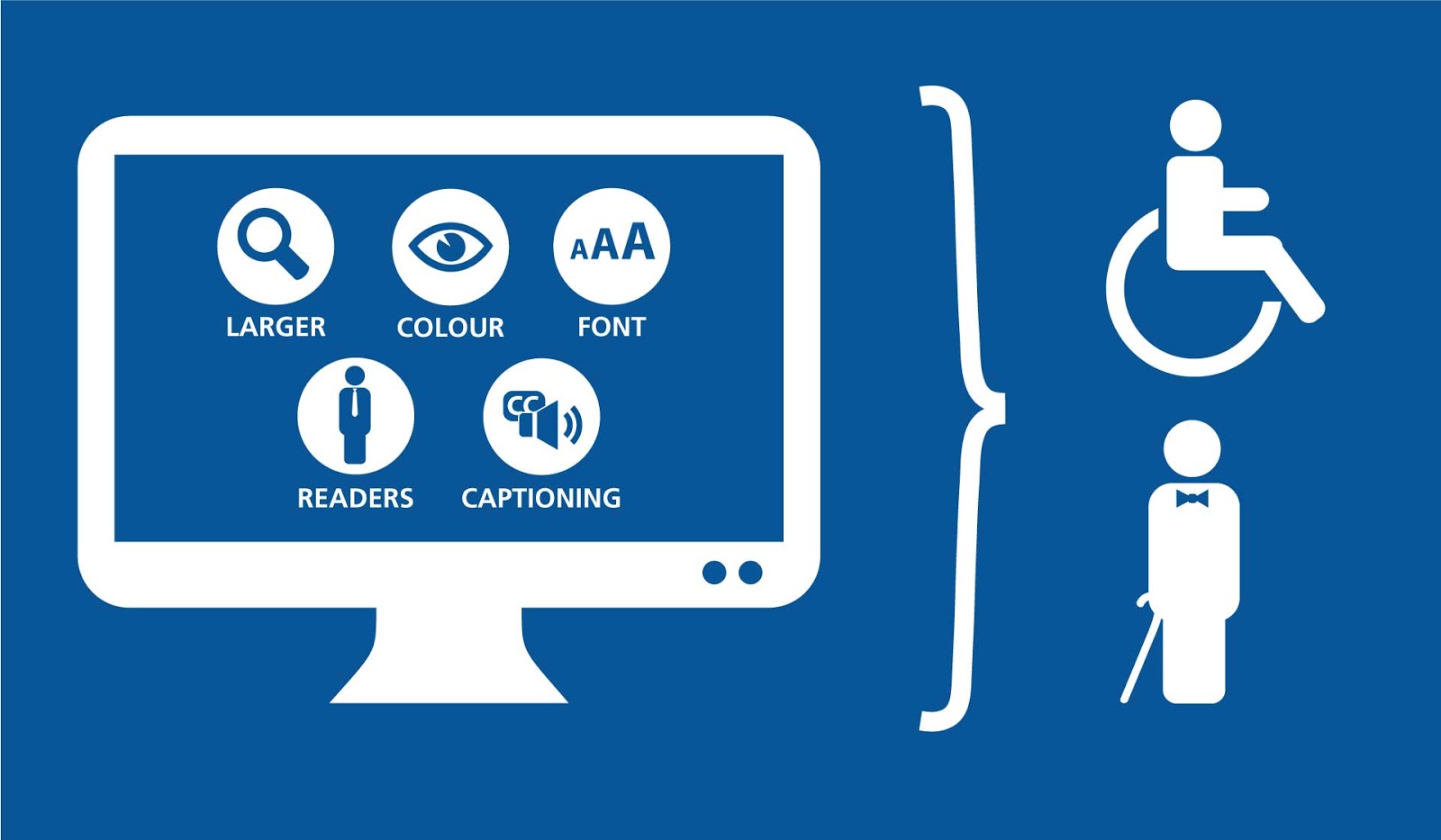
Strategies, standards, and supporting resources to make the Web accessible to people with disabilities. These tips are a few of the things you need to consider for web accessibility. The following resources help you learn why accessibility is important, and about guidelines for making the web more accessible to people with disabilities. Provide visible controls to allow users to stop any animations or auto-playing sound. This applies to carousels, image sliders, background sound, and videos. Sloped entries shall extend to a depth of 24 inches (610 mm) minimum and 30 inches (760 mm) maximum below the stationary water level.

3 Practice Putting Greens, Practice Teeing Grounds, and Teeing Stations at Driving Ranges

What designers can learn from Apple's latest accessibility features - Fast Company

What designers can learn from Apple's latest accessibility features.

Posted: Thu, 27 Jul 2023 07:00:00 GMT [source]

Web Accessibility, as explained by Frank Spillers, is fundamentally about optimizing the user experience for everyone, ensuring that content is accessible, inclusive, and user-friendly, regardless of ability. It aligns closely with usability, focusing on simplifying layouts, optimizing code, and making content more understandable and navigable, especially for screen-reader users. Accessibility goes beyond usability, emphasizing the need for content to be usable and accessible to all, promoting equality and inclusion on the web.

3 Shower Compartment Seats

If vanity counter top space is provided in non-accessible guest toilet or bathing rooms, comparable vanity counter top space, in terms of size and proximity to the lavatory, shall also be provided in accessible guest toilet or bathing rooms. At least one sleeping area shall provide a clear floor space complying with 305 on both sides of a bed. Toilet and bathing rooms that are provided as part of a patient or resident sleeping room shall comply with 603. A clear floor space complying with 305 shall be provided on each side of the bed.

A light can be used to indicate visually that assistance is on the way. Signs indicating the meaning of visual signals should be provided. Devices that do not require handsets are easier to use by people who have a limited reach. Where receipts are provided, speech output devices shall provide audible balance inquiry information, error messages, and all other information on the printed receipt necessary to complete or verify the transaction. Automatic teller machines shall provide the opportunity for the same degree of privacy of input and output available to all individuals.

An alteration of an existing element, space, or area of a building or facility shall not impose a requirement for accessibility greater than required for new construction. All areas of newly designed and newly constructed buildings and facilities and altered portions of existing buildings and facilities shall comply with these requirements. A "primary function" is a major activity for which the facility is intended. Mechanical rooms, boiler rooms, supply storage rooms, employee lounges or locker rooms, janitorial closets, entrances, corridors, and restrooms are not areas containing a primary function. Departures from particular requirements of either standard by the use of other methods shall be permitted when it is clearly evident that equivalent access to the facility or part of the facility is thereby provided. This course will help you achieve exactly that—from handling images to getting the most out of ARIA markup, you’ll learn how to approach accessibility from all angles.

4 Designated Aisle Seats

Where bins are provided for envelopes, waste paper, or other purposes, at least one of each type shall comply with 811. In each assembly area where audible communication is integral to the use of the space, an assistive listening system shall be provided. In other transportation facilities, public address systems shall comply with 810.7 and clocks shall comply with 810.8. In detention and correctional facilities, where at least one pay telephone is provided in a secured area used only by detainees or inmates and security personnel, at least one TTY shall be provided in at least one secured area.

The projects vary greatly in size and scope–from elevator renovations and installations to major, ADA-accessible renovations at Link Hall and in the JMA Wireless Dome. This site is a joint resource provided by the Teaching Engagement Program and UO Online. Situated within the Office of the Provost, our units work collaboratively to support the teaching mission of the University of Oregon. Please note that there are exceptions to this guideline, such as website content related to sensitive topics like domestic violence where discretion is necessary. Increasing the underline weight and tint on hover ensures that the transition between the default state to the hover state (and back) is based on movement and not on colour change. Basing the transition between states on movement rather than colour ensures that people who are colour-blind or visually impaired can see the change.

accessibility design

In some cases, this could mean locating a sign at the beginning of a route, not just at the inaccessible entrances to a building. Plumbing fixtures and accessories provided in a toilet room or bathing room required to comply with 213.2 shall comply with 213.3. Where multiple single user toilet rooms are clustered at a single location, no more than 50 percent of the single user toilet rooms for each use at each cluster shall be required to comply with 603. Where sinks are provided, at least 5 percent, but no fewer than one, of each type provided in each accessible room or space shall comply with 606. Where direct access is provided for pedestrians from a pedestrian tunnel or elevated walkway to a building or facility, at least one direct entrance to the building or facility from each tunnel or walkway shall comply with 404.

Where there are appropriate technical provisions, they must be applied to the elements that are covered by the scoping provisions. In addition, at least 2 percent of the residential dwelling units shall comply with 809.5. Cells with mobility features shall be provided in each classification level. Generally, rooms in a cluster are within sight of, or adjacent to, one another. Different styles of design provide users varying levels of privacy and convenience.

accessibility design

Controls, faucets, and shower spray units shall comply with 309.4. Shower stalls that are 60 inches (1525 mm) wide and have no curb may increase the usability of a bathroom because the shower area provides additional maneuvering space. Controls, other than drain stoppers, shall be located on an end wall.

Combination refrigerators and freezers shall have at least 50 percent of the freezer space 54 inches (1370 mm) maximum above the finish floor or ground. The clear floor or ground space shall be positioned for a parallel approach to the space dedicated to a refrigerator/freezer with the centerline of the clear floor or ground space offset 24 inches (610 mm) maximum from the centerline of the dedicated space. Doors shall not swing into the room unless a clear floor or ground space complying with 305.3 is provided beyond the arc of the door swing. Communications systems between a residential dwelling unit and a site, building, or floor entrance shall comply with 708.4. The technical standards for assistive listening systems describe minimum performance levels for volume, interference, and distortion. Sound pressure levels (SPL), expressed in decibels, measure output sound volume.

The ADA Standards for Accessible Design—along with the Title II and Title III regulations—say what is required for a building or facility to be physically accessible to people with disabilities. There are numerous tools and guides available for testing and planning for stark enough contrast levels to maintain an accessible design for multiple types of reduced vision and color vision deficiencies. Able is one popular Figma plugin that ensures your work is accessible. As a UX designer, you have the power to shape the user experience and create digital products that are accessible and inclusive for everyone. So embrace this responsibility and make accessibility a core part of your design philosophy.

Color vision can also decline with age, most often because of cataract  —  a clouding and yellowing of the eye’s lens. Most people who suffer from color vision deficiency are not blind to color but have a reduced ability to see them. However, the most severe forms of these deficiencies are referred to as color blindness. Every design decision has the potential to include or exclude customers.

This includes text on images, background gradients, buttons, and other elements. This does not apply for logos, or incidental text, such as text that happens to be in a photograph. The links below provide more information on the minimum contrast ratio as required by the WCAG and how to check contrast. “Contrast ratio” is a short version of the more technically correct term “luminance contrast ratio”. At least one turning space complying with 304 shall be provided on the same level as play components. Where swings are provided, the turning space shall be located immediately adjacent to the swing.

Where existing amusement rides are altered, the alteration shall comply with 234.4. Amusement rides designed primarily for children, where children are assisted on and off the ride by an adult, shall not be required to comply with 234.3. Patient bedrooms or cells required to comply with 223 shall be provided in addition to any medical isolation cells required to comply with 232.3. Detention facilities include, but are not limited to, jails, detention centers, and holding cells in police stations. Correctional facilities include, but are not limited to, prisons, reformatories, and correctional centers. This requirement applies to facilities such as office buildings, courthouses, and other facilities where admittance to the building or restricted spaces is dependent on two-way communication systems.

20 Slicked-Back Hairstyles for Women That Look Effortlessly Sleek

Table Of Content Adorable Short Pixie Haircuts Mixing Charm and Ease Medium Bob Hairstyle With Bangs Slick Pixie Vintage Long Pixie #28: Lon...